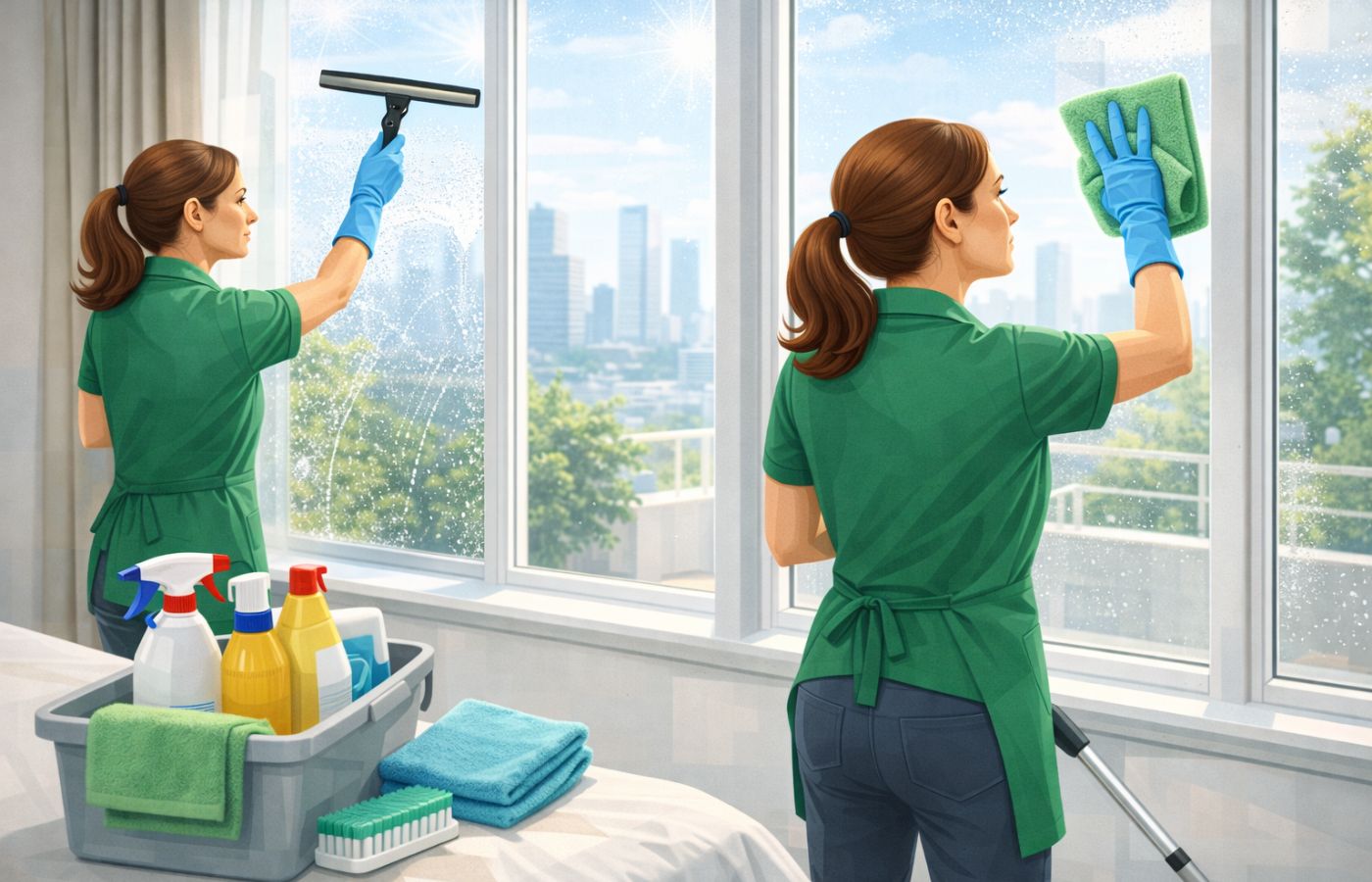

Clean Windows - Complete Guide | CleanSelect
Discover the best way to clean windows. Follow this complete guide with tools, tips and professional advice.
Watch the video for additional context

Discover the best way to clean windows. Follow this complete guide with tools, tips and professional advice.
Clean Windows often starts with focused preparation across worktops, cupboards, appliances, floors. Many households use phrases such as "clean windows step by step" and "clean windows checklist" when planning scope. Covering these areas early supports better hygiene outcomes and reduces repeat cleaning.
Checklist Format For Clean Windows
Professional teams often recommend working from top to bottom and from low-contact to high-contact areas, so newly cleaned zones are not recontaminated. In clean windows, this means addressing upper surfaces before final passes on appliances and sanitising products. If the workload becomes extensive or timing is constrained, comparing professional deep cleaning services can provide better consistency, clearer accountability, and more dependable hygiene outcomes across repeat visits.
Deep cleaning guidance is most reliable when the scope is explained clearly at the start, particularly for worktops and appliances where residue builds up gradually. Clean Windows should define both hygiene targets and practical boundaries, so effort is directed where it has the strongest effect. By linking each task to professional cleaning standards, households can maintain consistent standards instead of relying on occasional surface wipes that leave hidden contamination in place.
A structured process usually starts with preparation, then moves to cleaning, and finishes with sanitisation and verification. For clean windows, that sequence helps teams organise work around worktops and appliances without repeating tasks unnecessarily. Process-driven execution improves professional cleaning standards because each stage has a clear purpose: remove loose debris, degrease thoroughly, and confirm final hygiene outcomes before closing the section. This section supports "clean windows step by step" while keeping Clean Windows central to the guidance.
- Remove grease build-up from extractor fans and clean nearby worktops.
- Sanitise appliances and confirm alignment with surface sanitisation.
- Clear residue from cabinet handles, edges, and high-contact zones linked to checklist format for clean windows.
- Clean grout lines around backsplash tiles and inspect tile grout for limescale.
- Complete a final inspection to prioritise maintenance and prevent rapid re-soiling.
Step-by-step Process For Clean Windows
Deep cleaning guidance is most reliable when the scope is explained clearly at the start, particularly for cupboards and floors where residue builds up gradually. Clean Windows should define both hygiene targets and practical boundaries, so effort is directed where it has the strongest effect. By linking each task to hygiene practices, households can maintain consistent standards instead of relying on occasional surface wipes that leave hidden contamination in place.
In many households, signs of build-up appear first around cupboards and cleaning tools, especially after busy cooking periods. When planning clean windows, these areas often demand more attention than expected because grease and moisture settle in corners and edges over time. A practical way to frame this section is to answer real queries such as "clean windows checklist" and then map each action to the surfaces most likely to affect inspection quality and day-to-day cleanliness.
A common problem in this topic is uneven cleaning depth: visible surfaces are treated, but hidden zones around cupboards and cleaning tools are missed. The solution is to prioritise difficult points first, then apply the same quality checks across the rest of the room. With clean windows, this approach reduces repeat work and supports hygiene practices, because residue is removed systematically rather than chased in separate follow-up sessions. This section supports "clean windows checklist" while keeping Clean Windows central to the guidance.
- Remove grease build-up from extractor fans and clean nearby cupboards.
- Sanitise extractor fans and confirm alignment with kitchen maintenance routines.
- Clear residue from cabinet handles, edges, and high-contact zones linked to step-by-step process for clean windows.
- Clean grout lines around backsplash tiles and inspect sink fixtures for limescale.
- Complete a final inspection to prioritise maintenance and prevent rapid re-soiling.
Tools Needed For Clean Windows
Professional teams often recommend working from top to bottom and from low-contact to high-contact areas, so newly cleaned zones are not recontaminated. In clean windows, this means addressing upper surfaces before final passes on sanitising products and surface edges. If the workload becomes extensive or timing is constrained, comparing trusted cleaning providers can provide better consistency, clearer accountability, and more dependable hygiene outcomes across repeat visits.
Deep cleaning guidance is most reliable when the scope is explained clearly at the start, particularly for appliances and sanitising products where residue builds up gradually. Clean Windows should define both hygiene targets and practical boundaries, so effort is directed where it has the strongest effect. By linking each task to surface sanitisation, households can maintain consistent standards instead of relying on occasional surface wipes that leave hidden contamination in place.
A structured process usually starts with preparation, then moves to cleaning, and finishes with sanitisation and verification. For clean windows, that sequence helps teams organise work around appliances and sanitising products without repeating tasks unnecessarily. Process-driven execution improves surface sanitisation because each stage has a clear purpose: remove loose debris, degrease thoroughly, and confirm final hygiene outcomes before closing the section. This section supports "clean windows process" while keeping Clean Windows central to the guidance.
- Remove grease build-up from extractor fans and clean nearby appliances.
- Sanitise tile grout and confirm alignment with domestic cleaning processes.
- Clear residue from cabinet handles, edges, and high-contact zones linked to tools needed for clean windows.
- Clean grout lines around backsplash tiles and inspect food preparation areas for limescale.
- Complete a final inspection to prioritise maintenance and prevent rapid re-soiling.
Expert Framing
Professional cleaners recommend starting with appliances and other high-touch points before broad surface passes, because that sequence reduces cross-contamination and improves final quality checks. This approach aligns with search intent around "clean windows step by step" while keeping Clean Windows outcome-focused. If your scenario overlaps with how to clean an oven, review that guide as a complementary next step.
Best Practices For Clean Windows
Deep cleaning guidance is most reliable when the scope is explained clearly at the start, particularly for sanitising products and surface edges where residue builds up gradually. Clean Windows should define both hygiene targets and practical boundaries, so effort is directed where it has the strongest effect. By linking each task to domestic cleaning processes, households can maintain consistent standards instead of relying on occasional surface wipes that leave hidden contamination in place.
In many households, signs of build-up appear first around sanitising products and worktops, especially after busy cooking periods. When planning clean windows, these areas often demand more attention than expected because grease and moisture settle in corners and edges over time. A practical way to frame this section is to answer real queries such as "clean windows tools and products" and then map each action to the surfaces most likely to affect inspection quality and day-to-day cleanliness.
A common problem in this topic is uneven cleaning depth: visible surfaces are treated, but hidden zones around sanitising products and worktops are missed. The solution is to prioritise difficult points first, then apply the same quality checks across the rest of the room. With clean windows, this approach reduces repeat work and supports domestic cleaning processes, because residue is removed systematically rather than chased in separate follow-up sessions. This section supports "clean windows tools and products" while keeping Clean Windows central to the guidance.
- Remove grease build-up from extractor fans and clean nearby tile grout.
- Sanitise food preparation areas and confirm alignment with end-of-tenancy cleaning.
- Clear residue from cabinet handles, edges, and high-contact zones linked to best practices for clean windows.
- Clean grout lines around backsplash tiles and inspect cabinet handles for limescale.
- Complete a final inspection to prioritise maintenance and prevent rapid re-soiling.
Why This Cleaning Task Matters In Practice
Clean Windows matters because overlooked areas like worktops and cupboards can accumulate residue, moisture, and bacteria faster than visible surfaces. Explaining the reason behind each task helps readers make better prioritization decisions instead of applying the same effort everywhere.
Kitchen hygiene standards
A structured process usually starts with preparation, then moves to cleaning, and finishes with sanitisation and verification. For clean windows, that sequence helps teams organise work around surface edges and worktops without repeating tasks unnecessarily. Process-driven execution improves end-of-tenancy cleaning because each stage has a clear purpose: remove loose debris, degrease thoroughly, and confirm final hygiene outcomes before closing the section.
A common problem in this topic is uneven cleaning depth: visible surfaces are treated, but hidden zones around surface edges and appliances are missed. The solution is to prioritise difficult points first, then apply the same quality checks across the rest of the room. With clean windows, this approach reduces repeat work and supports end-of-tenancy cleaning, because residue is removed systematically rather than chased in separate follow-up sessions.
Deep cleaning guidance is most reliable when the scope is explained clearly at the start, particularly for surface edges and worktops where residue builds up gradually. Clean Windows should define both hygiene targets and practical boundaries, so effort is directed where it has the strongest effect. By linking each task to end-of-tenancy cleaning, households can maintain consistent standards instead of relying on occasional surface wipes that leave hidden contamination in place. This section supports "clean windows preparation guide" while keeping Clean Windows central to the guidance.
- Remove grease build-up from extractor fans and clean nearby worktops.
- Sanitise appliances and confirm alignment with kitchen maintenance routines.
- Clear residue from cabinet handles, edges, and high-contact zones linked to kitchen hygiene standards.
- Clean grout lines around backsplash tiles and inspect tile grout for limescale.
- Complete a final inspection to prioritise maintenance and prevent rapid re-soiling.
Common kitchen surfaces that require deep cleaning
Professional teams often recommend working from top to bottom and from low-contact to high-contact areas, so newly cleaned zones are not recontaminated. In clean windows, this means addressing upper surfaces before final passes on cupboards and floors. If the workload becomes extensive or timing is constrained, comparing trusted cleaning providers can provide better consistency, clearer accountability, and more dependable hygiene outcomes across repeat visits.
Deep cleaning guidance is most reliable when the scope is explained clearly at the start, particularly for high-touch handles and cupboards where residue builds up gradually. Clean Windows should define both hygiene targets and practical boundaries, so effort is directed where it has the strongest effect. By linking each task to home maintenance routines, households can maintain consistent standards instead of relying on occasional surface wipes that leave hidden contamination in place.
A structured process usually starts with preparation, then moves to cleaning, and finishes with sanitisation and verification. For clean windows, that sequence helps teams organise work around high-touch handles and cupboards without repeating tasks unnecessarily. Process-driven execution improves home maintenance routines because each stage has a clear purpose: remove loose debris, degrease thoroughly, and confirm final hygiene outcomes before closing the section. This section supports "clean windows quality inspection steps" while keeping Clean Windows central to the guidance.
Clean Windows Checklist
Clean Windows Checklist is a core sub-topic for clean windows. Use this section to convert the phrase into practical steps, verification points, and clear outcome criteria across worktops and appliances. A useful semantic variation is "clean windows step by step".
When evaluating clean windows checklist, compare effort, expected result quality, and whether specialist support may be required for complex or time-sensitive scenarios affecting sanitising products.
Clean Windows Cleaning Steps
Clean Windows Cleaning Steps is a core sub-topic for clean windows. Use this section to convert the phrase into practical steps, verification points, and clear outcome criteria across cupboards and floors. A useful semantic variation is "clean windows checklist".
When evaluating clean windows cleaning steps, compare effort, expected result quality, and whether specialist support may be required for complex or time-sensitive scenarios affecting cleaning tools.
Sanitize Clean Windows Surfaces
Sanitize Clean Windows Surfaces is a core sub-topic for clean windows. Use this section to convert the phrase into practical steps, verification points, and clear outcome criteria across appliances and sanitising products. A useful semantic variation is "clean windows process".
When evaluating sanitize clean windows surfaces, compare effort, expected result quality, and whether specialist support may be required for complex or time-sensitive scenarios affecting surface edges.
Clean Windows Hygiene Routine
Clean Windows Hygiene Routine is a core sub-topic for clean windows. Use this section to convert the phrase into practical steps, verification points, and clear outcome criteria across floors and cleaning tools. A useful semantic variation is "how to sanitise surfaces during clean windows".
When evaluating clean windows hygiene routine, compare effort, expected result quality, and whether specialist support may be required for complex or time-sensitive scenarios affecting high-touch handles.
Frequently Asked Questions
How long does a clean windows usually take?
A clean windows normally covers kitchen appliances, worktops, cupboard fronts, extractor fan surfaces, and high-contact handles. The best results come from organising tasks by zone and checking each area before moving on. Following one clear clean windows helps keep hygiene standards consistent and inspection-ready.
Should appliances be included in a clean windows?
To complete a clean windows, start with preparation, then clean and sanitise each zone in sequence, including sink fixtures and tiled areas. Use microfibre cloths, a suitable degreaser, and a non-scratch brush where needed. A structured clean windows reduces missed spots and improves overall cleanliness.
What tools are needed for a clean windows?
The time for a clean windows depends on kitchen size, condition, and residue build-up. A lightly used space may take a few hours, while heavier grease and limescale can extend the work. Using a detailed clean windows helps prioritise tasks and avoid repeat cleaning.
How should tile grout be treated in a clean windows?
Useful tools for a clean windows include microfibre cloths, degreaser, a grout brush, a bucket with warm water, and gloves. These support safe cleaning across food preparation areas, handles, and appliance edges. The right tools make each step in a clean windows more effective and consistent.
What are common mistakes when following a clean windows?
Common mistakes in a clean windows include skipping preparation, cleaning in the wrong order, and overlooking hidden edges around appliances. It also helps to avoid over-wetting surfaces and to inspect grout, corners, and fittings at the end. A careful clean windows prevents residue from returning quickly.
When should you hire professionals instead of doing a clean windows yourself?
Professional help is often sensible when a clean windows is extensive, time-limited, or requires specialist equipment. Many households compare trusted cleaning providers for clear scope, timings, and expected outcomes. This makes the clean windows easier to complete to a dependable standard.