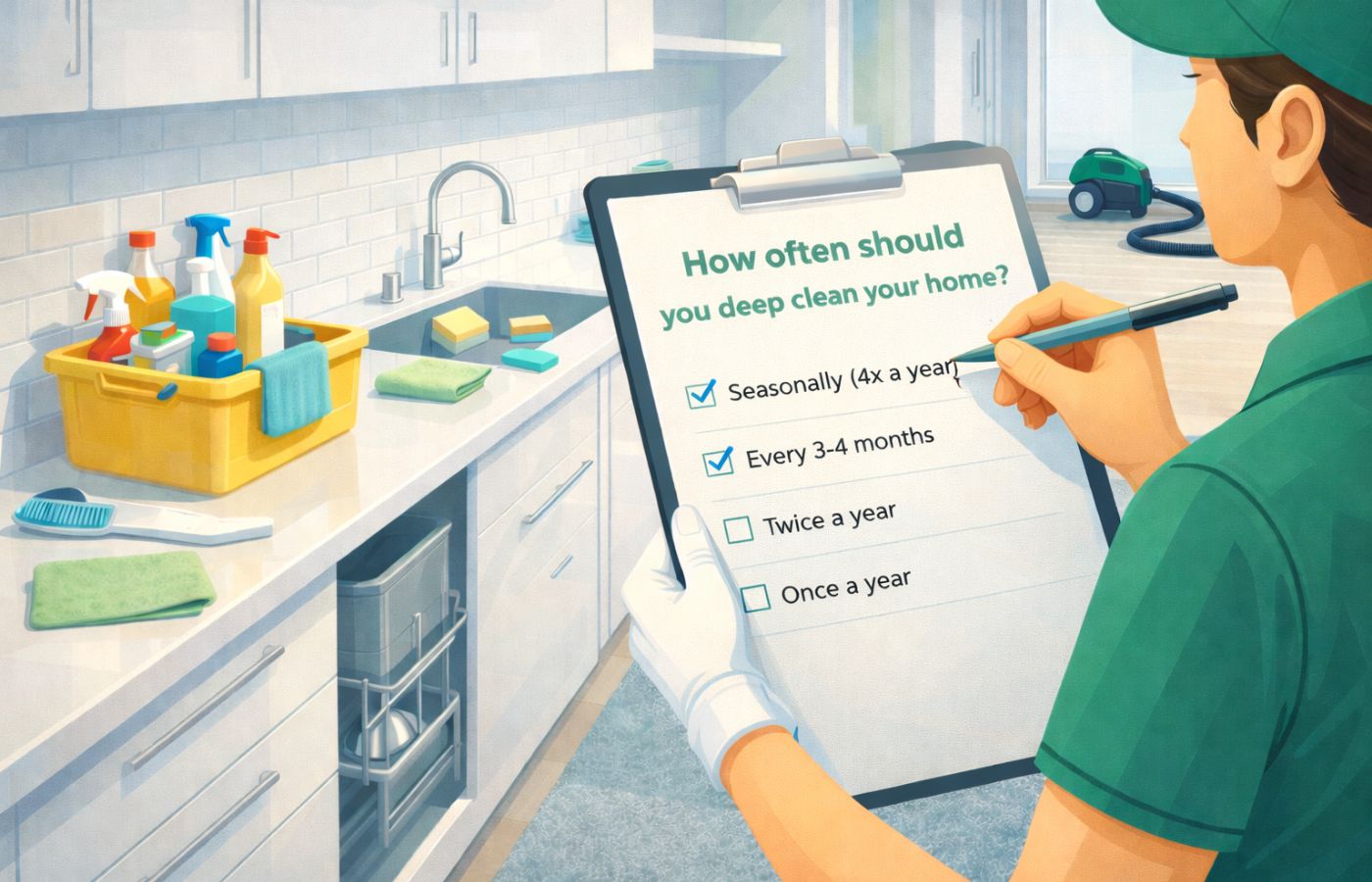
There is no single timetable that fits every home. Household size, pets, cooking, ventilation, the season and how each room is used all affect the work required. Instead of waiting for one fixed date, set a baseline and bring a task forward when you see grease, limescale, dust in overlooked places or a persistent smell whose source needs cleaning.
A practical schedule by area
- Area: Kitchen; Starting point for detailed cleaning: Every one to three months; What to check: Extractor cover and accessible filters, cupboard fronts, appliance seals and areas behind movable items.
- Area: Bathroom; Starting point for detailed cleaning: Every one to three months; What to check: Grout, taps, shower screen, drains and reachable corners where moisture collects.
- Area: Bedrooms and living areas; Starting point for detailed cleaning: Every three to six months; What to check: Skirting boards, reachable high surfaces, furniture edges and washable soft furnishings.
- Area: Whole home; Starting point for detailed cleaning: Every three to six months; What to check: Work through all rooms, including places missed in routine cleaning.
These are planning ranges, not rules. A busy kitchen might need a focused deep clean monthly while a rarely used guest room can wait longer. Follow appliance, floor and fabric care instructions before cleaning materials you are unsure about.
How to tell it is time
- Grease remains on cabinet fronts, splashbacks or the extractor after ordinary wiping.
- Limescale or soap residue returns quickly around fittings.
- Dust is visible on skirting boards, vents or behind accessible furniture.
- You are preparing for a move, visitors or a change in how a room is used.
Address a spill or a local problem as it happens; there is no benefit in waiting for the next whole-home session. If moisture, mould or an unexplained smell keeps returning after cleaning, investigate its cause rather than repeatedly covering it with products. Seek suitable specialist advice where the source is outside normal household cleaning.
Make the next deep clean manageable
- Walk through the home and list the areas routine cleaning misses. Put the dirtiest or most-used rooms first.
- Split the list into sessions you can finish, such as kitchen one day and bathroom the next. You do not have to deep clean the whole property at once.
- Clear movable items, dust from high to low, then clean surfaces and finish with floors. Use separate cloths for different areas.
- Check the result in good light and note anything needing another session or specialist help. Record the date and revise your schedule based on what you found.
Read every product label, test an unfamiliar product on an inconspicuous area, ventilate where directed and never mix cleaning products. Wear the protection specified on the label. Keep products away from children and pets.
Use the resources below for room-specific steps. If you want help with a larger job, check the proposed scope before booking.