Direct answer
How to clean an oven involves letting it cool completely, removing racks, clearing loose debris, and applying an oven-safe cleaner or baking soda paste to affected areas. Wipe away residue thoroughly and dry all surfaces before use. This approach helps reduce the risk of marks or surface damage by avoiding abrasive tools and applying products only to suitable areas. Ventilate the room when using strong cleaners and follow manufacturer instructions, especially for self-cleaning cycles or ovens with special materials like enamel or stainless steel. Avoid contact with heating elements, vents, seals, and controls to help reduce the risk of damage and ensure safer routine home cleaning.
Quick checklist
- Ensure the oven is completely cool before starting to clean.
- Remove all racks and trays from the oven for separate cleaning.
- Ventilate the kitchen well if using chemical oven cleaners or strong products.
- Apply oven-safe cleaner or a baking soda paste only to oven interior surfaces, avoiding heating elements and vents.
- Use non-scratch pads, soft cloths, or a manufacturer-safe plastic scraper to clean surfaces gently.
- Wipe or rinse all food-contact surfaces thoroughly to remove cleaner residue before using the oven again.
Requirements and materials
- Item: Oven-safe cleaner or baking soda paste. Used for: Purpose: helps loosen grease and baked-on food on oven-safe surfaces. Outcome: Safety note: use only where the manufacturer allows and wipe away cleaner residue thoroughly.
- Item: Microfiber cloths or soft sponges. Used for: Use for: wiping oven-safe surfaces with gentle pressure. Outcome: Safety note: helps reduce the risk of surface damage when used with manufacturer instructions.
- Item: Rack-safe cloth or tray brush. Used for: Use for: racks and trays after removing them from the oven. Outcome: Manufacturer note: suitable for removable parts when the oven manual allows it.
- Item: Protective gloves and ventilation. Used for: Use when applying chemical cleaners or working in enclosed spaces. Outcome: Safety note: helps reduce skin irritation and inhalation of fumes during cleaning.
Comparison and decision matrix
- Option: Manual cleaning with oven-safe cleaner. What it means: Using a chemical or natural cleaner applied by hand after cooling the oven. Recommended approach: Remove racks, ventilate the area, apply cleaner to surfaces avoiding heating elements, and wipe residue thoroughly. Watch-out: Avoid abrasive scrubbers and do not apply cleaner to electrical or gas parts.
- Option: Self-cleaning cycle. What it means: Using the oven's built-in high-temperature cleaning function to burn off residue. Recommended approach: Check the manual to confirm suitability, remove racks if required, ventilate the room, and never use chemical cleaner immediately before the cycle unless allowed. Watch-out: Not all ovens support this; improper use can cause smoke or damage.
- Option: Baking soda paste method. What it means: Applying a paste of baking soda and water to loosen grime naturally. Recommended approach: Let the paste dwell longer on tough spots, use a non-scratch pad or soft cloth to wipe, and rinse food-contact surfaces well. Watch-out: Avoid scrubbing hard to reduce risk of marks and do not apply to sensitive parts like seals or vents.
Step-by-step process
- Action: Cool down oven. Object: oven interior. Method: allow the oven to reach room temperature before cleaning. Outcome: reduces risk of burns and improves cleaning safety.
- Action: Remove racks and trays. Object: oven racks and trays. Method: take out all removable parts for separate cleaning. Outcome: allows thorough cleaning of all oven surfaces.
- Action: Clear loose debris. Object: oven floor and walls. Method: use a soft brush or cloth to remove crumbs and loose dirt. Outcome: prevents smearing and improves cleaner effectiveness.
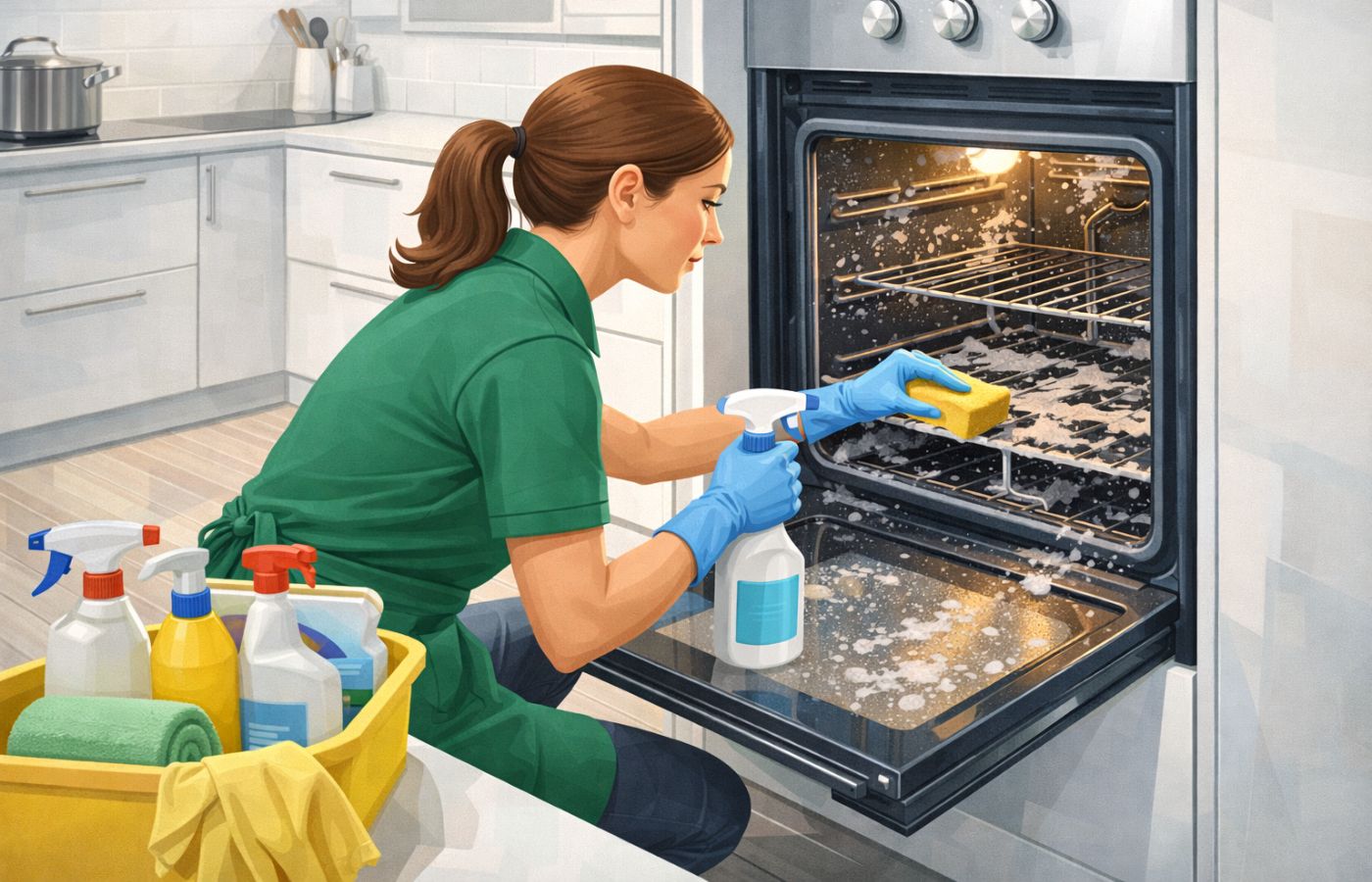
- Action: Apply oven-safe cleaner. Object: oven surfaces. Method: use a manufacturer-approved cleaner or baking soda paste. Outcome: helps break down grease and baked-on residue.
- Action: Wipe residue thoroughly. Object: cleaned surfaces. Method: use a damp cloth or sponge to remove cleaner and loosened grime. Outcome: reduces risk of residue and improves oven hygiene.
- Action: Dry and reassemble. Object: oven interior and racks. Method: dry all surfaces with a soft cloth and replace racks. Outcome: prepares oven for safe use and routine home cleaning.
What to avoid
How to clean an oven requires care to avoid unsafe tools, harsh chemicals, or shortcuts that can lead to poor cleaning results or appliance issues. Using inappropriate methods or ignoring manufacturer instructions can cause residue buildup, surface marks, or damage to sensitive parts. Following safer alternatives helps reduce risks and supports effective routine home cleaning.
- Avoid: Using abrasive scrubbers on oven surfaces. Why it is risky: They can scratch enamel, glass, or stainless steel finishes. Safer alternative: Use non-scratch pads or soft cloths recommended by the manufacturer.
- Avoid: Applying oven cleaner directly to heating elements, fans, vents, or electrical parts. Why it is risky: Chemicals can damage these components or cause malfunction. Safer alternative: Follow the manual to clean only approved areas and avoid sensitive parts.
- Avoid: Running a self-cleaning cycle without checking the appliance manual. Why it is risky: Some ovens require racks removal or ventilation, and improper use can cause smoke or damage. Safer alternative: Only use self-clean cycles if the manual permits, and prepare the oven as instructed.
- Avoid: Skipping ventilation when using strong chemical cleaners. Why it is risky: Fumes can be harmful to health and linger in the home. Safer alternative: Open windows and doors, and use milder cleaners when possible.
Common mistakes and risks
- Using harsh chemical cleaners on oven surfaces causes discoloration and increases the risk of residue buildup that affects cooking.
- Cleaning the oven while it is still hot leads to burns and creates unsafe conditions for handling cleaning products.
- Applying cleaning products directly to heating elements or vents causes damage and may impair oven functionality.
- Neglecting to ventilate the kitchen during cleaning increases inhalation of fumes and worsens indoor air quality.
Scenario-specific guidance
How to clean an oven varies depending on the oven type and materials. For ovens with stainless steel parts, use manufacturer-approved cleaners and soft cloths to help reduce the risk of marks or surface damage. When cleaning glass or enamel surfaces, avoid abrasive tools and opt for non-scratch pads or soft microfiber cloths. If your oven has a self-cleaning cycle, follow the appliance manual carefully, removing racks if instructed and ventilating the area well. Avoid applying cleaners directly to heating elements, fans, vents, or controls. Always test new products on a small hidden area first and wipe away any cleaner residue thoroughly to help reduce the risk of residue buildup and support safer routine home cleaning.
Typical ranges and decision points
How to clean an oven involves timing and care that vary by oven type, usage, and residue level. These ranges serve as practical guidance rather than absolute rules, helping you decide when and how to clean safely and effectively. Always consider your oven's manual and condition when applying these thresholds.
- Frequency: Clean visible oven spills within 24 hours after the oven cools. Affected by: spill size, residue type, and manufacturer instructions. Action: Wipe residue promptly to prevent baked-on buildup.
- Limit: Use oven-safe cleaner dwell times of 10-30 minutes only. Affected by: grease level, ventilation, and surface material. Action: Rinse thoroughly after dwell time to remove residue.
- Threshold: Deep clean the oven when residue remains after routine cleaning or smoke occurs during use. Affected by: cooking frequency, ventilation, and oven type. Action: Perform a thorough room-by-room clean or seek advice if issues persist.
- Trigger: Remove racks before self-cleaning cycles if the manual requires it. Affected by: oven model and cycle type. Action: Ventilate the room and avoid chemical cleaners immediately before self-cleaning.
When to seek expert help
When learning how to clean an oven, you should seek expert help if you notice any faults such as unusual smells, persistent smoke, or if the oven has damaged seals or electrical issues. If your oven has a self-cleaning cycle, consult the manufacturer’s instructions before use to avoid improper operation. Additionally, if you are unsure about which cleaning products are safe for your oven’s materials or if residue remains after cleaning, a professional appliance technician can provide guidance. Always avoid applying cleaners to sensitive parts like heating elements or gas components, and stop cleaning immediately if you detect gas smells or electrical malfunctions, then contact a qualified expert.