Direct answer
How to clean a bathroom effectively involves removing dirt, grime, and bacteria to maintain hygiene and prevent health risks. Neglecting proper cleaning can lead to mold growth and unpleasant odors. The direct solution is to use appropriate cleaning agents and tools, following a systematic approach to cover all surfaces including sinks, toilets, showers, and floors. Regular cleaning not only improves appearance but also ensures a safe and sanitary environment.
Quick checklist
- Gather all necessary cleaning supplies before starting to clean a bathroom.
- Remove all personal items and clear surfaces for easier access.
- Dust and sweep floors and surfaces to remove loose dirt and debris.
- Apply appropriate cleaners to toilets, sinks, tubs, and tiles following product instructions.
- Scrub and rinse all cleaned areas thoroughly to remove residue.
- Dry surfaces and replace items, ensuring no spots or streaks remain.
Requirements and materials
- Item: Rubber gloves. Used for: protecting hands from harsh chemicals and germs during cleaning. Outcome: prevents skin irritation and maintains hygiene.
- Item: Bathroom cleaner spray. Used for: dissolving soap scum, grime, and bacteria on surfaces. Outcome: ensures effective removal of dirt and sanitizes the area.
- Item: Scrub brush with stiff bristles. Used for: scrubbing tiles, grout, and tough stains. Outcome: loosens and removes stubborn buildup for a thorough clean.
- Item: Microfiber cloths. Used for: wiping surfaces without scratching and absorbing moisture. Outcome: leaves surfaces streak-free and dry quickly.
- Item: Toilet brush. Used for: cleaning the inside of the toilet bowl. Outcome: removes stains and bacteria, maintaining toilet hygiene.
- Item: Bucket with warm water. Used for: rinsing cloths and brushes during cleaning. Outcome: facilitates removal of loosened dirt and cleaner residues.
Comparison and decision matrix
- Option: Basic cleaning method. What it means: Using simple tools like a sponge and general cleaner for routine bathroom cleaning. Recommended approach: Ideal for regular maintenance to keep surfaces hygienic. Watch-out: May not remove tough stains or deep grime effectively.
- Option: Deep cleaning with specialized products. What it means: Employing stronger cleaners and scrubbing tools to tackle stubborn dirt and mold. Recommended approach: Use periodically for thorough sanitation and stain removal. Watch-out: Harsh chemicals can damage surfaces if not used properly.
- Option: Professional cleaning service. What it means: Hiring experts with advanced equipment and expertise for comprehensive bathroom cleaning. Recommended approach: Best for heavily soiled bathrooms or when time and effort are limited. Risk: Higher cost and scheduling constraints compared to DIY methods.
Step-by-step process
- Action: Gather all cleaning supplies. Object: bathroom surfaces and fixtures. Method: collect appropriate cleaners, brushes, and cloths. Outcome: ensures readiness and efficiency during cleaning.
- Action: Remove clutter. Object: bathroom counters and floor. Method: clear all personal items and debris. Outcome: provides unobstructed access for thorough cleaning.
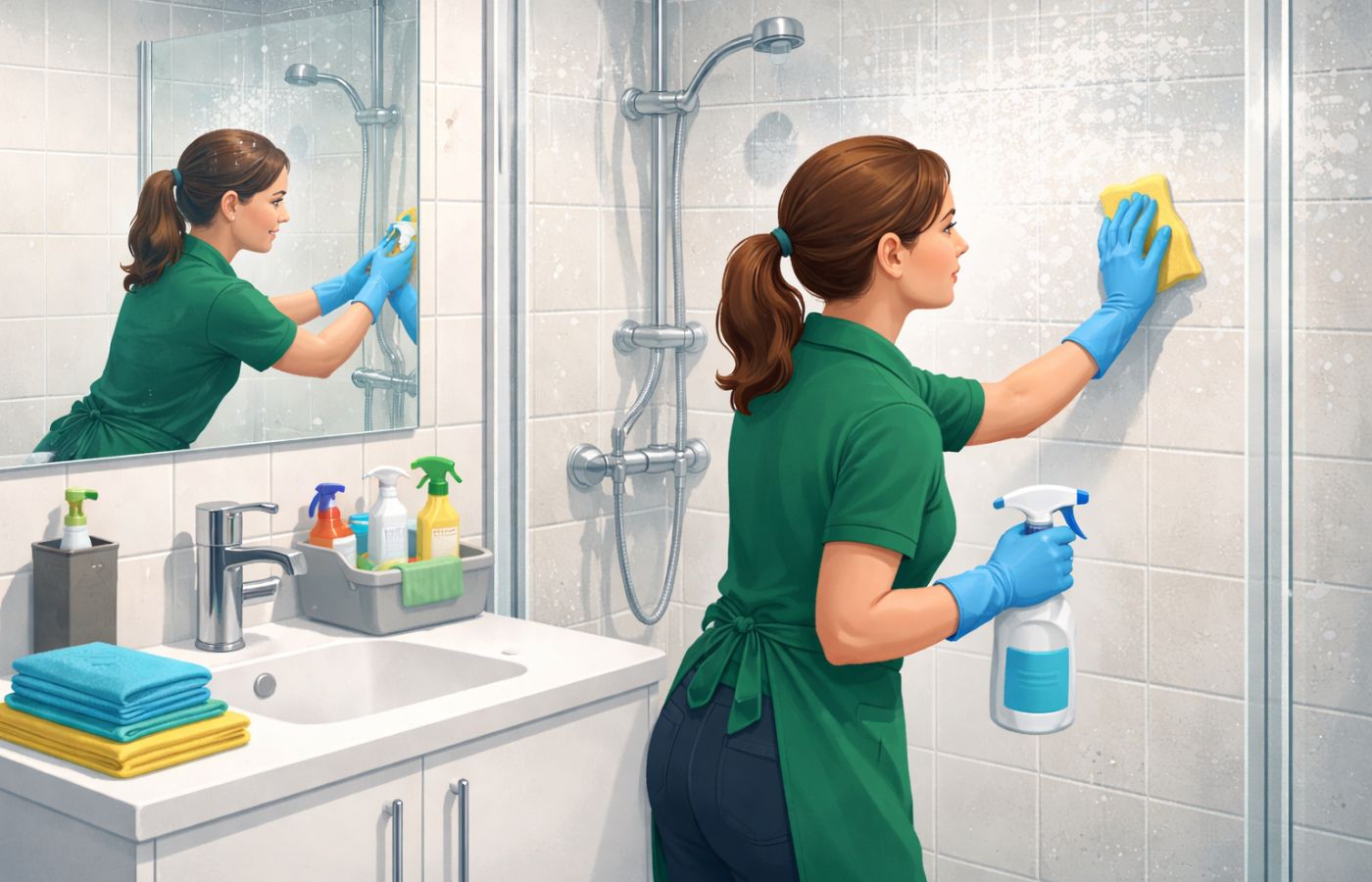
- Action: Apply cleaner. Object: toilet, sink, and tub surfaces. Method: use disinfectant sprays or solutions evenly. Outcome: breaks down grime and kills germs effectively.
- Action: Scrub surfaces. Object: all cleaned areas including tiles and fixtures. Method: use brushes or sponges with moderate pressure. Outcome: removes dirt and stains without damaging surfaces.
- Action: Rinse and wipe down. Object: cleaned surfaces. Method: use clean water and microfiber cloths to remove residue. Outcome: leaves surfaces spotless and free of cleaner buildup.
- Action: Dry and polish. Object: mirrors, faucets, and counters. Method: use dry cloths to prevent water spots and enhance shine. Outcome: achieves a fresh, streak-free finish.
What to avoid
When learning how to clean a bathroom, using unsafe tools or shortcuts can damage surfaces or leave harmful residues. Avoiding improper methods ensures a hygienic and lasting clean. Unsafe practices often cause stains, corrosion, or health risks, so it is important to choose safer alternatives and follow recommended steps.
- Avoid: Using abrasive scrubbers on delicate surfaces. Why it is risky: They can scratch tiles, glass, or fixtures, causing permanent damage. Safer alternative: Use soft microfiber cloths or non-scratch sponges.
- Avoid: Mixing cleaning chemicals like bleach and ammonia. Why it is risky: This creates toxic fumes that are hazardous to health. Safer alternative: Use one product at a time and rinse thoroughly between uses.
- Avoid: Overusing harsh chemical cleaners. Why it is risky: Excessive chemicals can corrode surfaces and harm plumbing. Safer alternative: Follow product instructions and dilute cleaners as recommended.
- Avoid: Skipping protective gloves and ventilation. Why it is risky: Exposure to chemicals can irritate skin and respiratory system. Safer alternative: Wear gloves and ensure good airflow during cleaning.
Common mistakes and risks
- Using harsh chemicals causes damage to bathroom surfaces and increases the risk of discoloration.
- Skipping the initial dusting step leads to smeared dirt and creates a less effective cleaning result.
- Over-wetting surfaces causes moisture damage and increases drying time, which can promote mold growth.
- Neglecting to rinse cleaning agents properly leads to residue buildup and worsens surface appearance.
Scenario-specific guidance
How to clean a bathroom varies depending on the size, materials, and usage frequency. For small bathrooms, focus on quick, regular cleaning to prevent buildup. In larger or shared bathrooms, prioritize thorough disinfection and attention to high-touch areas. If surfaces are delicate, use gentle cleaners to avoid damage. For bathrooms with mold or heavy stains, stronger treatments and longer cleaning times are necessary. Adjust your approach based on whether you are cleaning for routine maintenance or deep cleaning, and consider any allergies or sensitivities when selecting products.
Typical ranges and decision points
When learning how to clean a bathroom, typical ranges and thresholds provide practical guidance but vary by context such as bathroom size, surface types, and cleaning frequency. These ranges should be used as flexible decision points rather than strict rules, helping you adjust your cleaning routine effectively. If results fall outside these ranges, reassess your approach or tools to maintain hygiene and appearance.
- Frequency: Clean bathroom surfaces 1 to 3 times per week. Affected by: household size, usage intensity, and presence of pets. Action: Increase frequency if buildup or odors appear sooner.
- Threshold: Keep the surface wet for the contact time stated on the specific disinfectant label. Affected by: product and surface. Action: Follow the label for the stated disinfection claim; contact times vary.
- Range: Water temperature between 40°C to 60°C for cleaning. Affected by: surface sensitivity and safety considerations. Action: Avoid higher temperatures on delicate surfaces to prevent damage.
- Limit: Ventilation time of 15 to 30 minutes after cleaning. Affected by: room size, chemical strength, and air circulation. Action: Ensure adequate ventilation to reduce fumes and moisture buildup.
When to seek expert help
You should seek expert help when you encounter persistent stains, mold growth, or plumbing issues while learning how to clean a bathroom. If cleaning products cause damage or allergic reactions, or if the bathroom has delicate surfaces requiring special care, a professional cleaner can provide safe and effective solutions. Additionally, if you are unsure about the proper techniques or face time constraints, consulting an expert ensures thorough and hygienic results.