
Direct answer
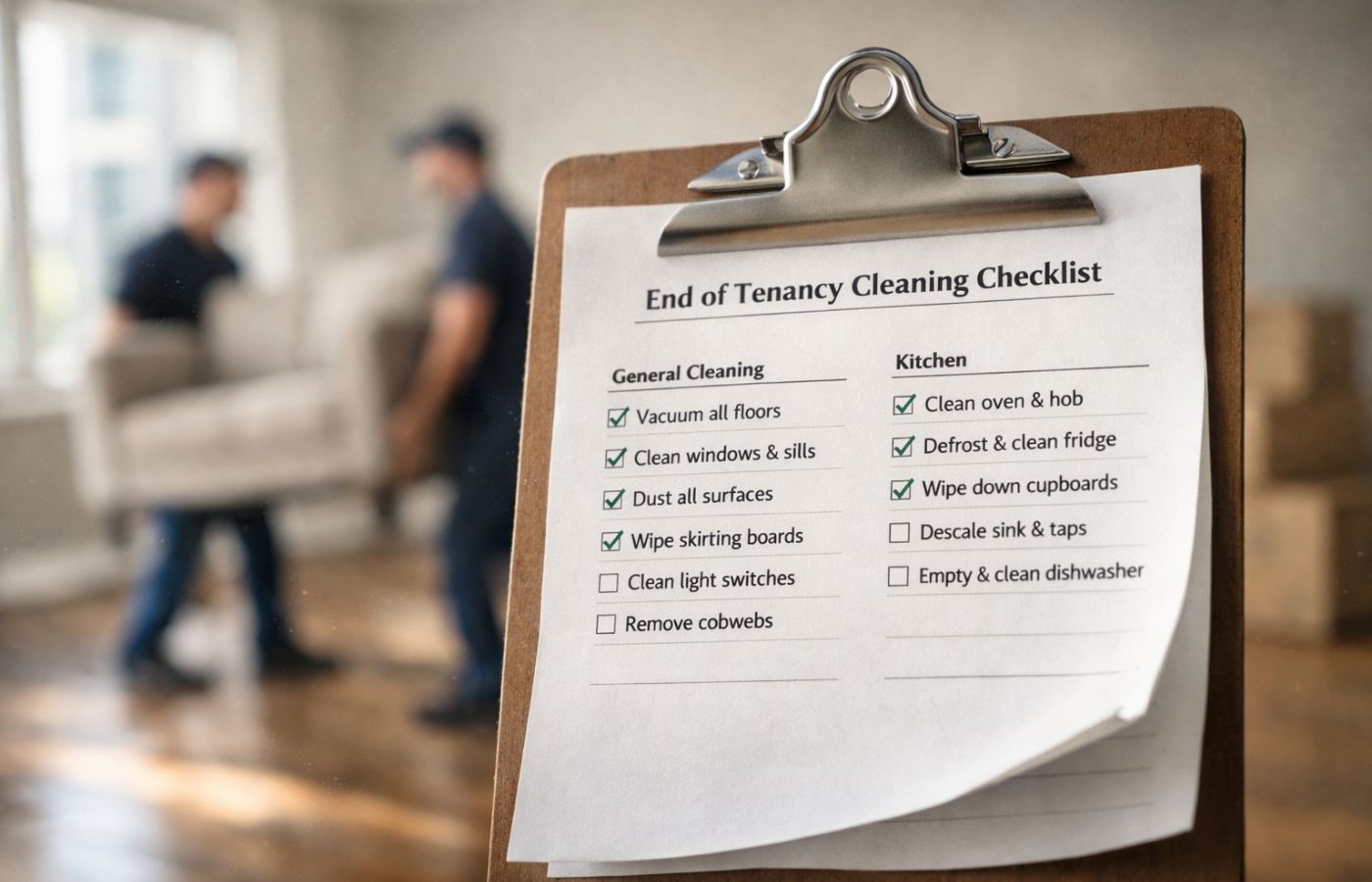
A common problem with End of tenancy cleaning checklist is missed rooms and overlooked high-touch areas during rushed final cleaning, so follow a structured whole-property checklist before handover to reduce avoidable re-cleaning after inspection. This checklist helps prepare the property for inspection by making it easier to check each room methodically and supports clearer communication with agents or landlords. By using an End of tenancy cleaning checklist, tenants can better manage the cleaning process, ensuring that all areas are covered thoroughly and reducing the risk of overlooked tasks that could delay the handover.
Quick checklist
- Check all rooms for visible dust and dirt on surfaces, including corners and skirting boards, to reduce missed cleaning tasks.
- Clean kitchen appliances inside and out, including oven, fridge, and microwave, to help prepare the property for inspection.
- Wipe down bathroom fixtures, tiles, and mirrors thoroughly to support clearer communication with agents or landlords.
- Vacuum and mop all floors, paying attention to edges and under furniture to make it easier to check each room methodically.
- Remove all rubbish and personal items, ensuring the property is left tidy and ready for handover.
- Refer to the tenancy agreement and inventory checklist to confirm any specific cleaning requirements or areas of focus.
Requirements and materials
- Item: Microfiber cloths. Used for: wiping surfaces gently without scratching. Outcome: helps reduce missed cleaning tasks and supports a more organised handover.
- Item: Multi-surface cleaner. Used for: cleaning various materials like countertops and appliances. Outcome: helps prepare the property for inspection by removing dirt and grime effectively.
- Item: Vacuum cleaner with attachments. Used for: cleaning carpets, floors, and hard-to-reach corners. Outcome: makes it easier to check each room methodically and reduces avoidable re-cleaning.
- Item: Gloves and protective gear. Used for: protecting hands during cleaning and handling chemicals. Outcome: supports safer cleaning practices and clearer communication with agents or landlords.
Comparison and decision matrix
- Option: DIY cleaning. What it means: The tenant or occupant performs the end of tenancy cleaning themselves. Recommended approach: Use this when time and cleaning skills are sufficient, and the checklist is well understood. Watch-out: Risk of missing tasks or inadequate cleaning that may lead to avoidable re-cleaning.
- Option: Professional cleaning service. What it means: Hiring a specialized cleaning company to perform the end of tenancy cleaning. Recommended approach: Choose this for heavy soiling, limited time, or when equipment and expertise are needed. Watch-out: It may increase cost and does not guarantee inspection acceptance.
- Option: Hybrid approach. What it means: Tenant completes basic cleaning and hires professionals for specific areas like carpets or appliances. Recommended approach: Use this to balance cost and thoroughness, focusing professional help where most needed. Watch-out: Coordination is required to ensure all checklist items are covered adequately.
Step-by-step process
- Action: Review tenancy agreement. Object: cleaning requirements. Method: check specific clauses and agent instructions. Outcome: helps prepare the property for inspection and reduces missed tasks.
- Action: Gather cleaning materials. Object: cleaning tools and products. Method: collect appropriate supplies based on checklist. Outcome: supports a more organised handover and efficient workflow.
- Action: Clean room by room. Object: each room in the property. Method: follow the end of tenancy cleaning checklist systematically. Outcome: makes it easier to check each room methodically and reduces avoidable re-cleaning.
- Action: Focus on high-touch areas. Object: door handles, switches, and fixtures. Method: use disinfectants and microfiber cloths. Outcome: helps document what has been cleaned and supports clearer communication with agents or landlords.
- Action: Inspect completed areas. Object: cleaned rooms and surfaces. Method: perform a visual and tactile check against the checklist. Outcome: helps prepare the property for inspection and reduces missed cleaning tasks.
- Action: Document cleaning completion. Object: checklist or photos. Method: record evidence of cleaning done. Outcome: supports clearer communication with agents or landlords and may reduce avoidable re-cleaning.
What to avoid
Using unsafe tools, inappropriate methods, or shortcuts in your end of tenancy cleaning checklist can lead to incomplete cleaning, damage to surfaces, or missed areas. These poor outcomes may cause avoidable re-cleaning and complicate the handover process. It is important to follow recommended practices and avoid assumptions that could reduce the effectiveness of your cleaning efforts.
- Avoid: Using abrasive cleaners on delicate surfaces. Why it is risky: Can cause scratches and permanent damage. Safer alternative: Use pH-neutral cleaners designed for the specific material.
- Avoid: Skipping dusting before wet cleaning. Why it is risky: Dust can smear and create streaks, reducing cleaning quality. Safer alternative: Always dust surfaces first to remove loose particles.
- Avoid: Over-wetting carpets or upholstery. Why it is risky: Excess moisture can lead to mold growth and prolonged drying times. Safer alternative: Use minimal moisture and quick-drying methods.
- Avoid: Ignoring tenancy agreement cleaning requirements. Why it is risky: May miss key areas expected by landlords or agents, leading to disputes. Safer alternative: Review the checklist in the tenancy agreement and inventory before starting.
Common mistakes and risks
- Neglecting to follow the end of tenancy cleaning checklist causes missed cleaning tasks and increases the risk of avoidable re-cleaning.
- Overlooking hard-to-reach areas leads to incomplete cleaning and creates a negative impression during inspection preparation.
- Using inappropriate cleaning products damages surfaces and results in worse cleaning outcomes that may require costly repairs.
- Rushing the cleaning process increases the chance of errors and causes overlooked spots, which complicates the handover with agents or landlords.
Scenario-specific guidance
The end of tenancy cleaning checklist adapts depending on your living situation. For shared accommodations, focus on communal areas to support a smoother handover. If you have pets, pay extra attention to removing hair and odors to reduce avoidable re-cleaning. When time is limited, prioritise high-traffic rooms and visible surfaces to help prepare the property for inspection efficiently. Always check your tenancy agreement and any agent instructions, as requirements may vary. In cases of heavy soiling or limited equipment, professional cleaning services can assist but do not guarantee inspection outcomes.
Typical ranges and decision points
Typical ranges and thresholds in an End of tenancy cleaning checklist vary depending on property size, tenancy duration, and landlord expectations. These values serve as practical guidance to help prepare the property for inspection and reduce avoidable re-cleaning, but they are not absolute guarantees. Adjust cleaning frequency and thoroughness based on specific context, visible dirt levels, and tenancy agreement requirements.
- Frequency: Clean high-touch surfaces 2-3 times per week during tenancy end preparation. Affected by: foot traffic, pets, and dust accumulation. Action: Increase frequency if surfaces feel sticky or dusty within 24 hours.
- Threshold: Deep clean kitchen appliances when visible grime or grease remains after routine cleaning. Affected by: cooking frequency and appliance type. Action: Use specialist cleaners or professional help if buildup persists.
- Time span: Spend 60-90 minutes on bathroom cleaning per session. Affected by: bathroom size, number of fixtures, and soil level. Action: Divide cleaning into zones if time exceeds 90 minutes to maintain thoroughness.
- Limit: Use no more than 1 damp cloth pass on wooden furniture to avoid moisture damage. Affected by: wood finish, ventilation, and cleaner strength. Action: Test on a hidden area before full cleaning.
When to seek expert help
Consider engaging professional cleaners for your end of tenancy cleaning checklist when facing tight deadlines, extensive dirt buildup, or challenging areas such as carpets, ovens, or specialist surfaces. Experts bring the right equipment and techniques to ensure thorough cleaning, which supports a smoother handover and better preparation for property inspection. If your tenancy agreement or agent specifies detailed cleaning standards, professional help can minimize overlooked tasks and reduce the need for costly re-cleaning. Review your inventory and checkout report carefully to identify areas where expert intervention will most effectively meet your cleaning obligations.